
Effluent Treatment
ETP Plant
An ETP plant combines physical, chemical and biological stages as required to make industrial wastewater suitable for the intended reuse or disposal route.
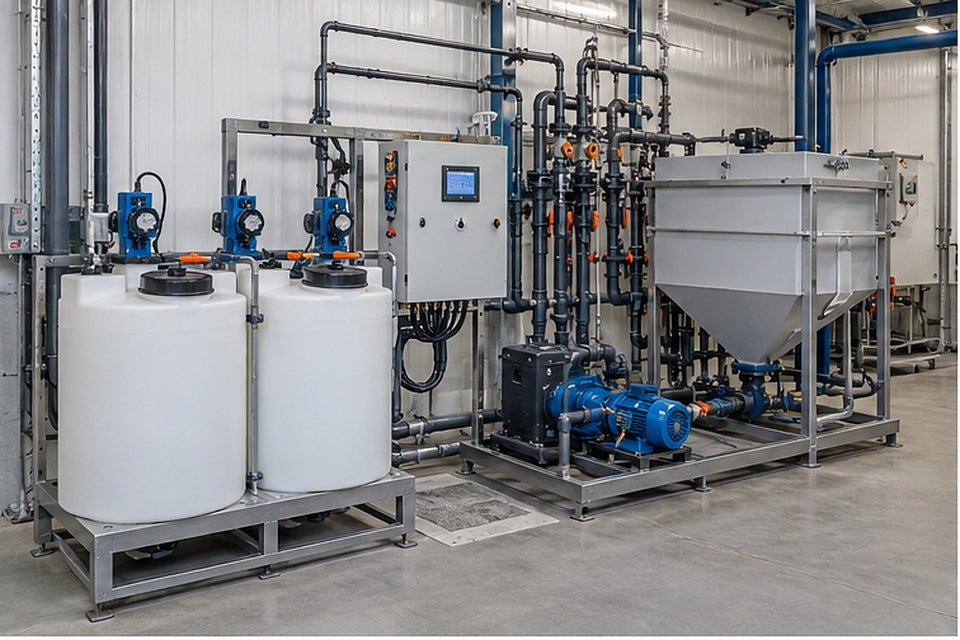
Treatment for industrial wastewater
Wastewater generated by manufacturing and commercial operations can contain solids, oil, dissolved chemicals, colour, acidity, alkalinity and biodegradable matter. A single standard process cannot address every stream.
The treatment sequence is therefore chosen after reviewing the production process, water consumption, wastewater quantity, sampling results and operating pattern.
Core ETP stages
- Collect wastewater and balance changes in flow and concentration.
- Screen or separate coarse material, oil and settleable solids.
- Correct pH and apply coagulation or precipitation where required.
- Use biological treatment for biodegradable contaminants.
- Clarify and filter the water to remove remaining solids.
- Add advanced polishing or disinfection when the end use requires it.
- Manage the sludge and residual streams produced by treatment.
Applications listed for ETP systems
- Pharmaceutical and chemical processing
- Textile dyeing and finishing
- Tanneries and leather processing
- Food and beverage production
- Engineering and manufacturing facilities
- Commercial and institutional wastewater with industrial characteristics
Design and operating considerations
- Representative wastewater testing
- Daily and peak flow
- Variations between shifts or production batches
- Required treated-water quality
- Chemical storage and dosing
- Sludge handling and disposal
- Operator access, controls and monitoring
- Space for future maintenance
Discuss your etp plant requirement
Share the water source, flow, treatment objective and site conditions with Pure Waters.