Industrial Wastewater Treatment
Effluent Treatment Plant
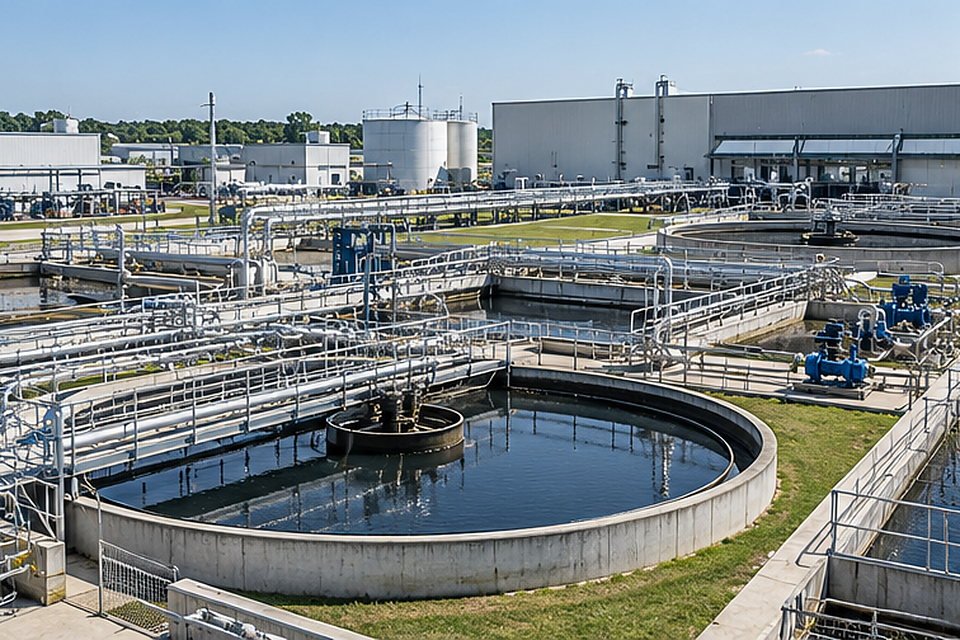
An effluent treatment plant treats industrial wastewater so contaminants and separated solids can be managed before the water is reused or discharged through the selected route.
Key terms in an ETP
Understanding effluent treatment
Industrial wastewater can contain suspended solids, dissolved material, oils, chemicals and biodegradable contaminants. The required treatment train varies from one industry to another because the wastewater composition and intended end use are different.
The supplied reference presents ETP systems across a 5 KLD to 100 MLD range. Final capacity and process selection require a representative wastewater analysis and a clear definition of the treated-water objective.
Typical treatment sequence
- Collect and equalise incoming wastewater to reduce sudden changes in flow and concentration.
- Adjust pH and add treatment chemicals where coagulation, precipitation or neutralisation is required.
- Separate suspended solids through settling, flotation or filtration.
- Apply biological treatment when biodegradable organic matter is present.
- Polish the water with filtration, adsorption, membrane treatment or disinfection where required.
- Thicken, dewater and manage the sludge generated by the process.
Industries and applications described
The existing page material identifies pharmaceuticals, textiles, tanneries and chemical processing among the industries where contamination can be significant. Packaged ETPs can also help small and medium facilities organise treatment where space and operating resources are limited.
Treatment and reuse benefits
- Separates contaminants before wastewater is returned to the environment
- Supports reuse when the treatment quality is suitable for the intended purpose
- Reduces the volume of untreated industrial effluent
- Organises solids and sludge handling within the treatment process
- Allows the process to be adapted to the industry and wastewater analysis
- Provides a defined operating and monitoring sequence
Discuss your effluent treatment plant requirement
Share the water source, flow, treatment objective and site conditions with Pure Waters.