
Hard-Water Treatment
Water Softening Plant
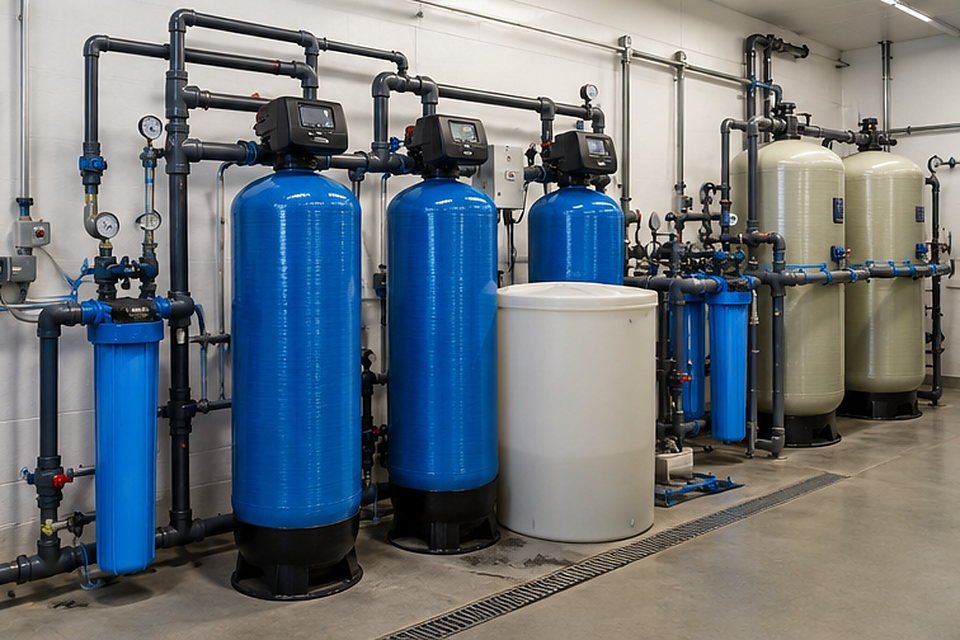
A water softening plant reduces calcium and magnesium hardness that can form scale in plumbing, boilers, heat exchangers, membranes and process equipment.
Pure Waters
Design • Fabrication • Installation • Maintenance
How ion-exchange softening works
Hard water passes through a vessel containing cation-exchange resin. The resin exchanges hardness ions for sodium ions, producing softened water until the resin reaches its working capacity.
The unit is then regenerated with a brine solution, rinsed and returned to service. Automatic valves can sequence service, backwash, brine draw, slow rinse, fast rinse and refill.
Main components
- Pressure vessel and ion-exchange resin
- Multiport or automatic control valve
- Brine tank and salt-storage arrangement
- Internal distributors and collection system
- Feed and treated-water piping
- Flow, pressure or hardness monitoring where specified
Sizing inputs
Softener capacity depends on raw-water hardness, required flow, daily water use and the desired interval between regenerations. Iron, turbidity and chlorine can affect resin performance and may require pretreatment.
The regeneration programme must also account for salt availability, drain capacity and the route for backwash and brine wastewater.
Applications
- Boiler and cooling-water pretreatment
- Reverse-osmosis pretreatment
- Hotels, laundries and commercial buildings
- Food and beverage utilities
- Industrial washing and process-water systems
- Domestic and institutional hard-water treatment
Other softening approaches
The existing page material also refers to domestic, industrial and electromagnetic water-conditioning options. Selection should be based on the required result and verified water analysis.
Discuss your water softening plant requirement
Share the water source, flow, treatment objective and site conditions with Pure Waters.