
Irrigation System
Sprinkler Irrigation System
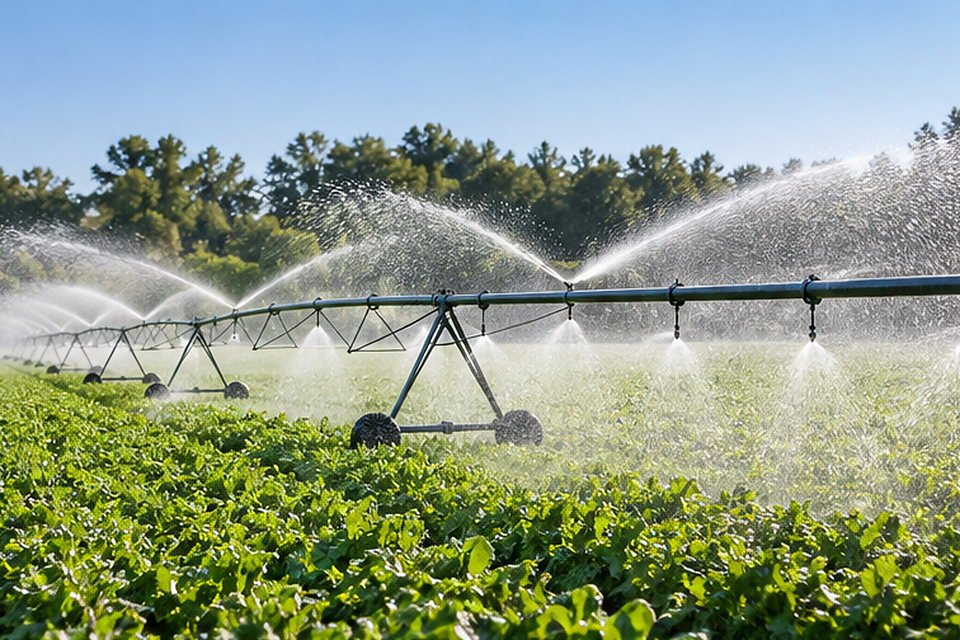
A sprinkler irrigation system applies pressurised water through a network of pipes and nozzles, releasing droplets over the field in a rainfall-like pattern.
Pure Waters
Design • Fabrication • Installation • Maintenance
How sprinkler irrigation distributes water
Water is pumped from the available source into main lines, sub-mains and laterals. Sprinkler heads or nozzles then discharge the water into the air so it falls across the soil surface.
The range of nozzle discharge and the layout of the pipe network allow the system to be adapted to different field sizes, crops and soil conditions.
Main components of the system
The existing system description identifies the pump, pipe network and sprinkler devices as the principal working parts.
- Pump unit
- Fertiliser application units and filters
- Main lines, sub-mains and lateral pipes
- Sprinkler heads and nozzles
- Couplers, valves, risers, bends and end plugs
Sprinkler irrigation valves and control
Solenoid valves receive commands from the controller and open or close at the selected watering intervals. Valve boxes protect these components from landscape equipment while keeping them accessible for inspection and repair.
The source page also lists residential and commercial sprinkler valves together with manual PVC ball valves.
Design inputs
The design objective is to apply a reasonably uniform depth of water at a predetermined application rate. A practical layout starts with an inventory of the field resources and local climatic conditions.
Land
Topography, soil, field development, labour needs and the intended crops influence the sprinkler device, spacing and operating pattern.
Water
The source, available flow and water quality affect pump selection, filtration and the number of sprinklers that can operate together.
Climate and power
Solar radiation, temperature, humidity, rainfall, evapotranspiration and wind are considered alongside the available electrical, diesel, solar, wind or biofuel power source.
Operational advantages
- Reduces the need for open conveyance channels and associated losses
- Can be applied on many soil types and uneven land
- Supports high-density planting where suitable
- Leaves more land available because field bunds are not required
- Allows soluble fertilisers and treatment chemicals to be applied through the system
- A movable layout can simplify field operation
- Can reduce labour requirements and help manage soil compaction
- Can assist with frost protection and local microclimate management
Discuss your sprinkler irrigation system requirement
Share the water source, flow, treatment objective and site conditions with Pure Waters.