Shared Industrial Treatment
Common Effluent Treatment Plant
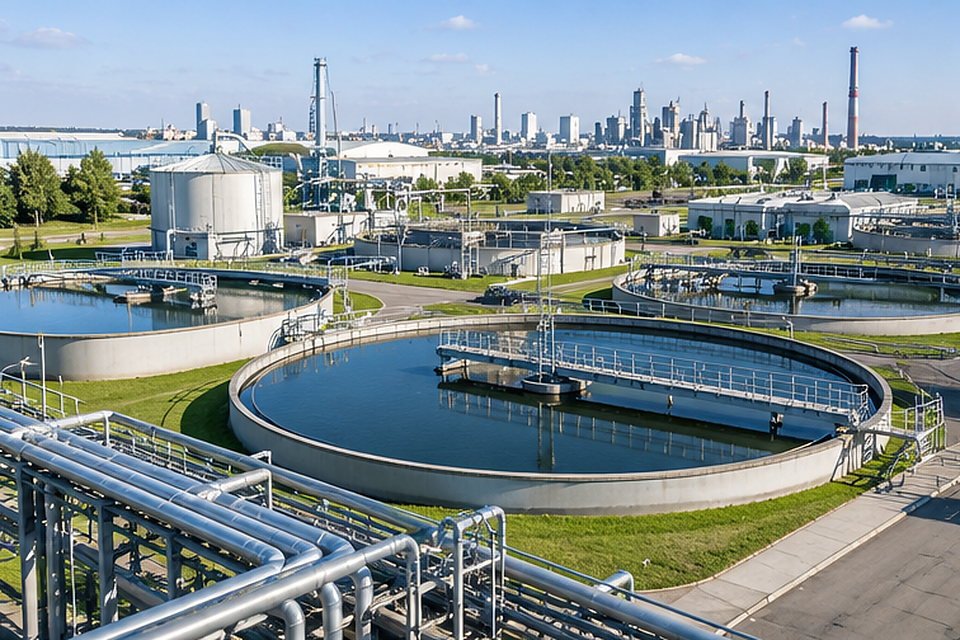
A common effluent treatment plant receives wastewater from a group of facilities and treats the combined stream through shared equalisation, physical, chemical and biological processes.
Why common treatment is used
Smaller industrial facilities may not have the land, capital, staffing or treatment volume needed for separate full-scale plants. A shared facility can consolidate treatment equipment and specialist operation.
The approach depends on disciplined collection and acceptance controls because the combined wastewater must remain suitable for the selected common process.
How a common ETP works
- Receive and record wastewater from the connected member facilities.
- Screen the inflow and separate coarse solids, oil or grit.
- Equalise the combined stream to reduce flow and concentration variation.
- Neutralise pH and apply coagulation or precipitation where required.
- Clarify the chemically treated wastewater.
- Use activated-sludge or another biological process for biodegradable matter.
- Polish and disinfect the treated water as required.
- Thicken and dewater the combined sludge.
- Pools treatment infrastructure across several small facilities
- Supports centralised operation, testing and maintenance
- Reduces duplication of major equipment
- Provides a common route for sludge handling
- Allows specialist process oversight
- Can accommodate phased participation when hydraulic and process capacity permit
Critical management controls
- Clear influent acceptance criteria
- Sampling and records for each contributing stream
- Control of toxic or incompatible discharges
- Flow measurement and load allocation
- Emergency storage or diversion
- Chemical and biological process monitoring
- Sludge, reject and treated-water routing
- Defined responsibilities for member facilities and plant operators
Combined-process design
Equalisation, neutralisation, aeration, clariflocculation and activated-sludge treatment are among the stages identified in the existing page content. The exact sequence is determined from the mixture of wastewater received.
Discuss your common effluent treatment plant requirement
Share the water source, flow, treatment objective and site conditions with Pure Waters.